





































 1001 Games
 2 Player Games
 3D Games
 Adventure Games
 Bike Games
 Brain Games
 Car Games
 Cooking Games
 Dress Up Games
 Fighting Games
 Football Games
 Girls Games
 Gun Games
 Kids Games
 Makeup Games
 Matching Games
 Parking Games
 Puzzle Games
 Racing Games
 Skill Games
 Sports Games
 Surgery Games
 War Games
 Zombie Games
Traffic Tour
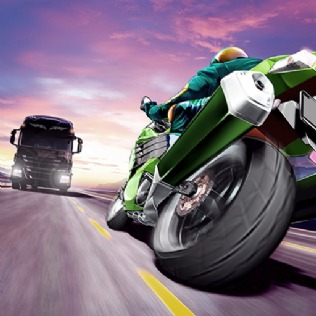
Traffic Tour is an adrenaline-fueled multiplayer racing experience that emphasizes competitive online play, realistic vehicle behavior, and a broad selection of tracks and environments. Players encounter a variety of settings from dense urban canyons and high-speed highways to arid desert strips and illuminated night courses. The title combines refined driving simulation elements with arcade accessibility, delivering a balance between precise handling, drift mechanics, and immediate thrills. With numerous missions and daily challenges, it sustains engagement through progression systems, vehicle upgrades, and social competition.
Overview
The core appeal of Traffic Tour lies in its fusion of realistic driving physics and multiplayer matchmaking mechanisms. The game engine models traction, weight transfer, and collision response to produce a credible sense of speed while remaining forgiving enough for casual players. Visual fidelity and optimized asset streaming ensure consistent frame pacing across desktop and mobile browsers, while adaptive network code reduces latency during live races. In addition to head-to-head contests, the title features asynchronous leaderboards, time trials, and mission-based objectives designed to reward both skillful maneuvering and strategic vehicle tuning.
How to Play?
Begin by selecting a vehicle that matches your preferred style—lightweight cars favor agility and drifting, whereas heavier models excel in straight-line stability and top-speed runs. Engage in matchmaking to join public races or invite friends to private lobbies for measured competition. Track selection alters racing dynamics: city circuits require precision around tight corners and traffic obstacles, highways emphasize drafting and sustained acceleration, and desert stages test traction on uneven surfaces. Progress is achieved by completing over 100 structured missions as well as daily challenges that grant in-game currency and parts for vehicle customization.
Progression and Customization
Vehicle upgrades include engine tuning, suspension adjustments, nitrous enhancements, and aerodynamic kits. The upgrade tree impacts acceleration curves, braking efficiency, and cornering grip. Effective progression often involves balancing power increases with handling improvements to maintain control under high-speed conditions. Cosmetic upgrades and liveries provide identity without affecting performance, while tuning parameters enable experienced players to tailor responsiveness and drift characteristics for competitive play.
Controls
Control schemes vary by platform but are optimized for HTML5 delivery with responsive input handling. On-screen touch controls support steering, throttle, brake, and nitro activation for mobile devices, while keyboard input maps to arrow keys or WASD for desktop browsers. Gamepad compatibility is typically recognized by modern browsers and offers analog steering and trigger-based acceleration for nuanced control. Latency management and input smoothing are essential for consistent control across networked matches.
- Touch and swipe steering for mobile users
- Keyboard steering and braking for desktop play
- Gamepad support where the browser detects connected controllers
- Quick-access nitro and drift assist toggles
Tips
To improve race outcomes, focus on mastering braking points and corner entry rather than relying exclusively on straight-line speed. Utilize drafting behind opponents to gain slipstream advantage on long straights, then deploy nitrous for overtakes. When navigating city stages, anticipate dynamic traffic patterns and avoid heavy collisions that disrupt speed and handling. For endurance events, prioritize balance and tire management; for short sprints, aggressive acceleration and early nitro use are often decisive.
- Practice cornering lines in time trial mode to learn optimal apexes.
- Allocate upgrades to balance power and handling rather than maximizing a single stat.
- Use camera and HUD adjustments to enhance visibility of oncoming obstacles and competitor positions.
- Observe leaderboards and opponent behavior to adapt strategies against different driving styles.
Technical Considerations
As an HTML5 title, the game relies on browser capabilities for rendering, audio, and network communication. Efficient asset streaming, GPU-accelerated rendering, and server-side matchmaking contribute to a smooth multiplayer experience. Variable network conditions can introduce latency; therefore, adaptive interpolation and predictive client-side movement help maintain perceived responsiveness. Compatible browsers with up-to-date WebGL and WebSocket support deliver the best results. Html5 games can only be played with an internet connection.
FAQ
- Is this game free to play? Free-to-play distribution models are common, with optional in-game purchases for convenience or cosmetic content while retaining core gameplay accessibility.
- Can I play across devices? Cross-platform play is typically supported between desktop and mobile browsers, subject to platform and browser compatibility.
- How does matchmaking work? Matchmaking balances skill ratings, vehicle class, and latency to produce competitive races and fair pairings.
- What do I do if I experience lag? Reducing graphical settings, closing background applications, and switching to a wired connection can mitigate latency; persistent issues may require checking browser updates or network configuration.
Keywords and related concepts woven through this review include online racing, multiplayer competition, vehicle tuning, leaderboards, drift mechanics, nitrous boost strategy, collision detection, traffic density, time trials, progressive missions, browser compatibility, adaptive matchmaking, mobile responsiveness, and graphical optimization. These elements collectively describe the gameplay ecosystem and technological considerations that inform player experience.
Explore the available tracks, experiment with different vehicles and tuning setups, and engage with the multiplayer modes to fully assess the driving model and competitive dynamics. Practical testing across varied circuits and conditions provides the best insight into strengths and trade-offs of each car and setup—approach each session methodically and refine techniques based on observed performance.